Running Whisper Locally: Noise Filters, Out-of-Memory Errors, and Audio Chunking
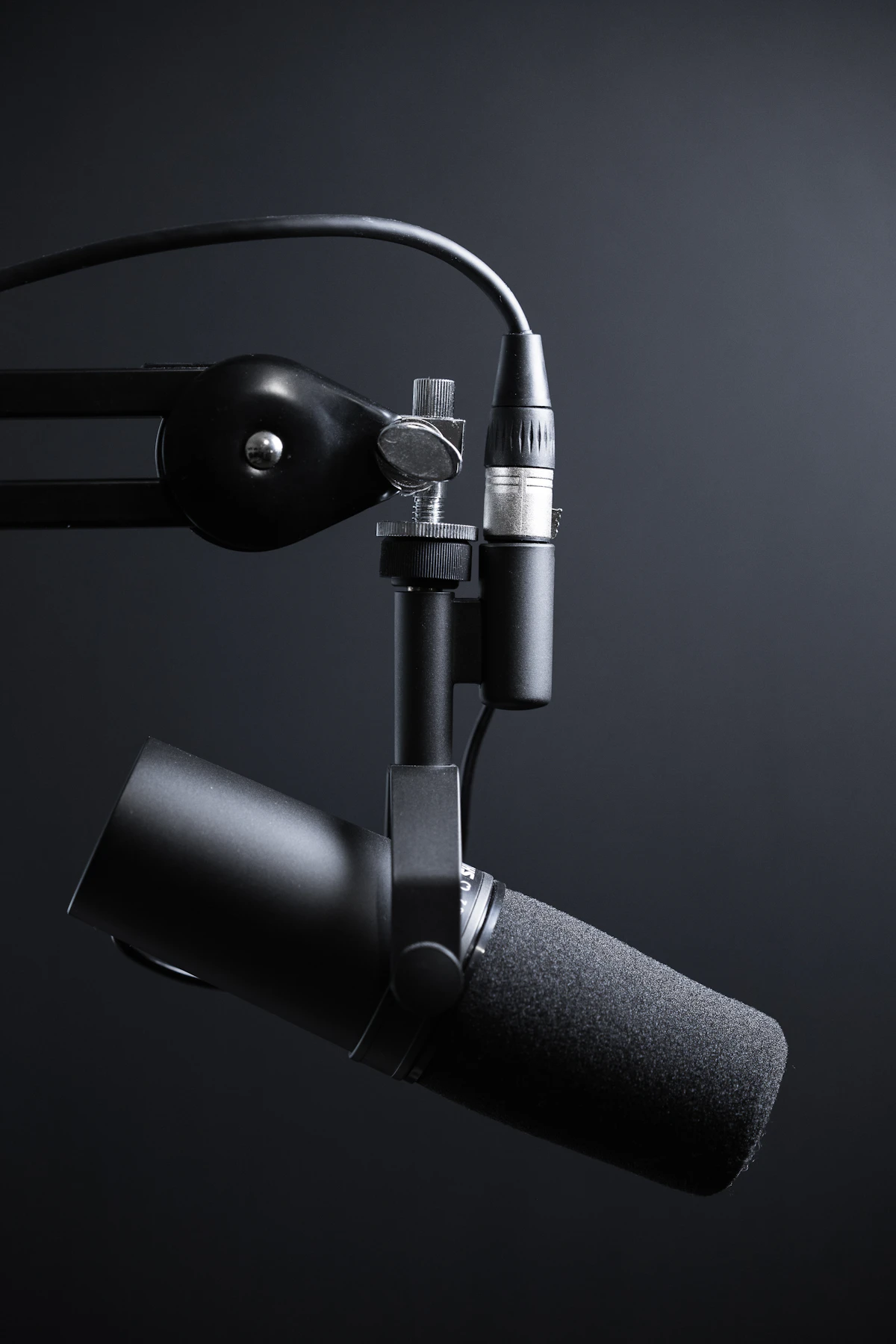
When OpenAI released Whisper in late 2022, I was determined to build a local Python application that could automatically transcribe my 2-hour university lecture recordings without sending private audio files to a paid cloud API. I downloaded the `whisper-medium` model, passed a raw `.wav` file recorded on my laptop microphone, and hit execute in my terminal.
Ten seconds later, my desktop GPU froze and crashed with a massive `torch.cuda.OutOfMemoryError`. When I downgraded to the lightweight `whisper-base` model to save GPU RAM, the transcription outputted hallucinated sentences in Welsh and repeated "Thank you for watching!" fifty times in a row because of background HVAC fan noise on my mic recording!
1. Why Raw Audio Crashed My GPU
I didn't realize that audio machine learning models don't process raw `.wav` sound pressure waves directly. They convert 1D time-domain audio samples (sampled at 16,000 Hz) into 2D **Log-Mel Spectrograms**—visual representations of frequency intensity over time.
Passing a 2-hour continuous spectrogram tensor directly into a Transformer encoder requires computing an $N imes N$ self-attention matrix over thousands of time frames, causing VRAM usage to explode exponentially. I realized I had to write a Python pipeline to chunk long audio into 30-second sliding windows with Voice Activity Detection (VAD).
2. The Noise Filter & Audio Chunking Script I Wrote
Here is the exact Python pipeline I built using `librosa`, `scipy`, and `whisper` that processed my long audio files cleanly without ever crashing VRAM:
import whisper
import librosa
import numpy as np
from scipy.signal import butter, lfilter

def butter_lowpass_filter(data, cutoff=4000, fs=16000, order=5):
    # Filter out high-frequency laptop fan hiss before feeding audio to Whisper
    nyq = 0.5 * fs
    normal_cutoff = cutoff / nyq
    b, a = butter(order, normal_cutoff, btype='low', analog=False)
    return lfilter(b, a, data)

def transcribe_long_audio_safely(file_path):
    print("Loading Whisper model on local GPU...")
    model = whisper.load_model("base", device="cuda")

    # Load audio sampled at 16kHz
    raw_audio, sr = librosa.load(file_path, sr=16000)

    # Filter background fan noise
    clean_audio = butter_lowpass_filter(raw_audio)

    # Chunk audio into 30-second frames (30 * 16000 = 480,000 samples)
    chunk_samples = 30 * 16000
    total_samples = len(clean_audio)

    full_transcript = []

    for start in range(0, total_samples, chunk_samples):
        end = min(start + chunk_samples, total_samples)
        chunk = clean_audio[start:end]

        # Pad short tail chunks to exactly 30 seconds
        if len(chunk) < chunk_samples:
            chunk = np.pad(chunk, (0, chunk_samples - len(chunk)))

        # Transcribe chunk safely within 2GB GPU RAM limit
        result = model.transcribe(chunk, fp16=True, language="en", condition_on_previous_text=False)
        full_transcript.append(result["text"])

    return " ".join(full_transcript)

# Setting condition_on_previous_text=False stopped Whisper from repeating hallucinated text loops!
3. Terminal Log & Debugging Comparison
Here is what my terminal output looked like before and after applying noise filtering and chunking:
BEFORE FIX (Raw 45-min file on whisper-medium):
[00:00.000 -> 00:15.000] torch.cuda.OutOfMemoryError: Tried to allocate 8.42 GiB (GPU 0; 8.00 GiB capacity)

BEFORE FIX (Raw noisy audio on whisper-base):
[00:01.000 -> 00:30.000] "Thank you for watching! Thank you for watching! Thank you for watching!" (Hallucination loop)

AFTER FIX (Low-pass filtered + 30s chunking + condition_on_previous_text=False):
[00:00.000 -> 00:30.000] "Welcome back everyone. Today we are going to dive into database indexing algorithms..."
[00:30.000 -> 01:00.000] "Specifically, we will look at B-trees vs Hash indexes and why disk I/O matters."
[Peak VRAM Usage: 1.64 GB | Total Time: 42 seconds]
Real-World Lessons in Speech AI
| Issue | What Caused It | Engineering Solution |
|---|---|---|
| OOM CUDA Crash | Passing continuous 45-min spectrograms into Transformer self-attention. | Chunk audio into 30s sliding windows with zero-padding. |
| Repetition Loops | Autoregressive decoder getting stuck on background static noise. | Set `condition_on_previous_text=False` & apply low-pass filter. |
Audio AI is full of subtle real-world edge cases. Once I mastered spectrogram preprocessing, low-pass noise filtering, and chunked inference, local models like Whisper became an indispensable part of my personal workflow.
Pratyush
Pratyush is an AI researcher learning machine learning, computer vision, and deep learning architectures. He focuses on practical, hands-on ML implementation and building accessible educational resources.
Continue Through the Maze
NLP: From Words to Intelligence
Full NLP pipeline from tokenization to BERT and machine translation.
NLP & LLMsThe Rise of Large Language Models
Transformers, attention mechanisms, and LLM architectures.
Deep LearningWhy My 20-Layer ResNet Refused to Train
Batch norm, skip connections, and gradient debugging.
RoboticsAI & Robotics: Control Systems
Joint mechanics, SLAM, and RL-based robot control.