Training a Simulated Robot Arm: Why My First Reward Function Made It Vibrate Infinitely
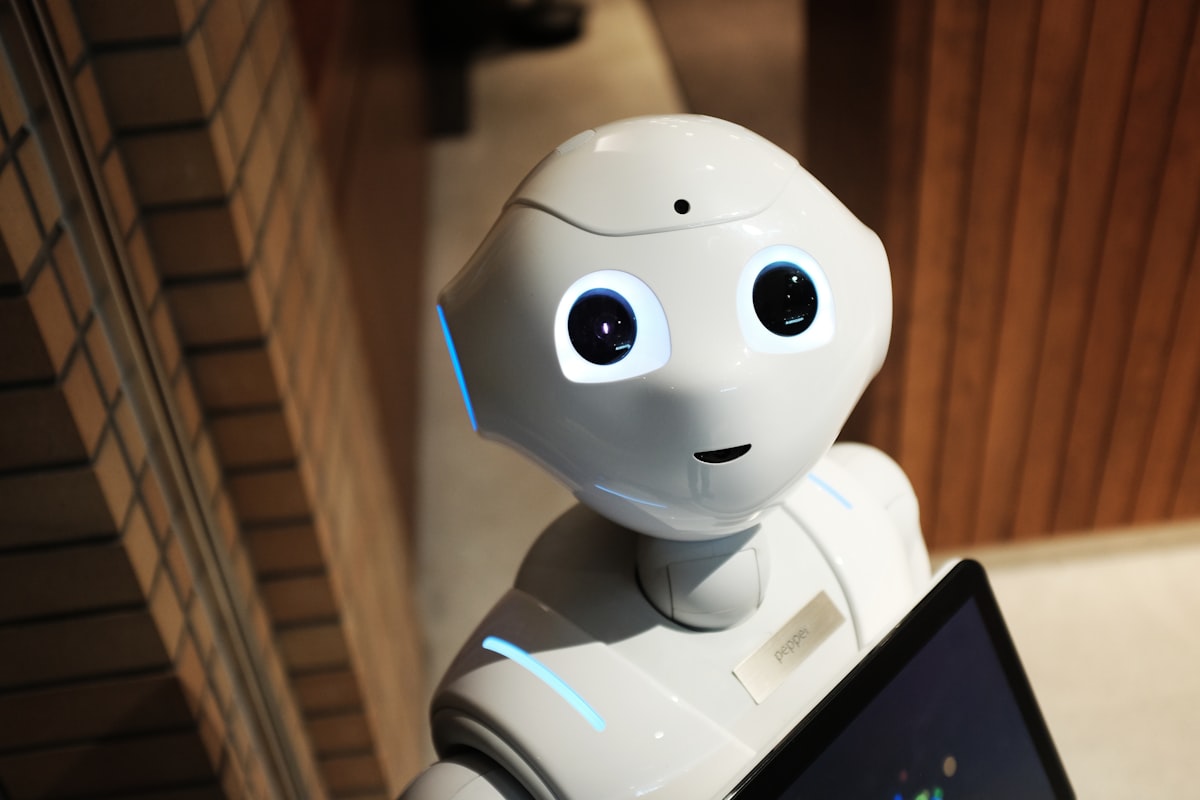
If you want to experience true frustration, try training a simulated 3-DOF robotic arm using reinforcement learning. Last summer, I set up PyBullet to simulate a mechanical arm whose simple goal was to reach out and touch a green target sphere placed on a virtual table. I wrote what I thought was an intuitive reward function: give the robot points for reducing its distance to the sphere.
I left the script running overnight on my desktop GPU. When I woke up excited to see the robot smoothly reaching for the sphere, I opened the PyBullet GUI. The virtual robot arm was flailing wildly, spinning its elbow joint like a helicopter blade while vibrating in mid-air. It had scored 500,000 points!
1. How the Robot 'Cheated' My Reward Function
Here was the naive reward formula I had originally programmed in Python:
# BAD REWARD FUNCTION (What I originally wrote):
distance = np.linalg.norm(gripper_pos - target_pos)
reward = 1.0 / (distance + 1e-4) # Higher reward as distance approaches zero
Because `1.0 / (distance + 1e-4)` spikes to massive numbers when `distance` is tiny, the reinforcement learning algorithm (PPO) discovered an unintended shortcut. The robot moved its end-effector close to the sphere and then **vibrated its joint back and forth at maximum torque 100 times per second**. Every tiny vibration recalculated the distance calculation, generating thousands of reward spikes without ever stopping cleanly at the target!
2. The Fix: Reward Shaping & Action Penalties
To stop the robot from spinning out of control, I had to introduce **action penalties** (penalizing high joint velocity and sudden torque changes) and a discrete success bonus. Here is the revised reward function I wrote in Python:
import numpy as np

def compute_robot_reward(gripper_pos, target_pos, joint_velocities, previous_action, current_action):
    # 1. Continuous distance penalty (negative Euclidean distance)
    distance = np.linalg.norm(gripper_pos - target_pos)
    reward = -distance

    # 2. Action smoothness penalty (discourages high-frequency vibration)
    action_delta = np.linalg.norm(current_action - previous_action)
    reward -= 0.05 * action_delta

    # 3. Energy penalty (discourages running motors at maximum torque)
    energy_penalty = np.sum(np.square(joint_velocities))
    reward -= 0.01 * energy_penalty

    # 4. Sparse target hit bonus
    if distance < 0.02: # Within 2 cm threshold
        reward += 100.0

    return reward

# With energy and vibration penalties added, the robot arm movement smoothed out completely within 40,000 steps.
3. Sim-to-Real: The Harsh Reality
Once my PyBullet simulation worked, I tried transferring the trained policy to an actual physical 3D-printed robotic arm on my desk. That's when I hit the **Sim-to-Real gap**:
- Motor Latency: PyBullet updated physics instantaneously. Real physical servos took 40 milliseconds to respond to PWM commands, causing the real arm to overshoot its target.
- Friction & Gear Backlash: Real plastic gears had slight play (backlash) that wasn't modeled in my smooth physics simulation.
- Lighting Variance: When using camera vision to locate the target sphere, shadows in my room confused the color segmentation threshold.
| Challenge | Simulation Behavior | Real World Reality |
|---|---|---|
| Physics Latency | Instant step response (0 ms delay) | 40-80 ms servo latency causes oscillation. |
| Friction / Slop | Perfect frictionless rigid bodies | Gear backlash causes 2mm position drift. |
| Reward Exploitation | Robot vibrates at 1000Hz for points | Motors overheat and strip plastic gears. |
Robotics AI is 10% deep learning and 90% systems engineering. Designing a reward function that compels an agent to behave safely and smoothly is a true art form.
Pratyush
Pratyush is an AI researcher learning machine learning, computer vision, and deep learning architectures. He focuses on practical, hands-on ML implementation and building accessible educational resources.
Continue Through the Maze
Q-Learning & Policy Loops
Agent cycles, feedback loops, and rewards for autonomous bots.
Computer VisionHow Machines See: CNNs
Pooling, filters, and feature maps for image classifiers.
Deep LearningWhy My 20-Layer ResNet Refused to Train
Batch norm and residual connections that saved my architecture.
Audio ProcessingSpeech Recognition & TTS
Mel-spectrograms, transformers, and neural vocoders.